
Metadata
1. Metadata
Is metadata different from data?
Metadata are information that describe other data. They make datasets easier to find, understand, and interpret correctly.
Let's look at a simple example from everyday life:
For a product, information such as the brand, material, colour, size, or price helps describe its characteristics. Similarly, metadata describe and provide important information about a research dataset.
For research data, metadata can provide information about:
- How and when the data were collected: for example, which methods, instruments, software, or measurement technologies were used.
- Who or what was investigated: for example, the characteristics of the study participants, such as age or gender.
- How the data were processed and analysed: for example, which software, scripts, or code were used.
- How the data were published and shared: for example, under which title, by which authors, and under which licence.
Why is metadata important for data research?
Metadata are useful not only after a dataset has been found, helping to understand and interpret the data, but also during the search process itself:
- Repositories and data search engines rely on metadata to make datasets findable. The more complete, informative, and structured the metadata, the easier it is to find, understand, and reuse the data.
Metadata should be unambiguous
To avoid misunderstandings, metadata should be as clear and unambiguous as possible.
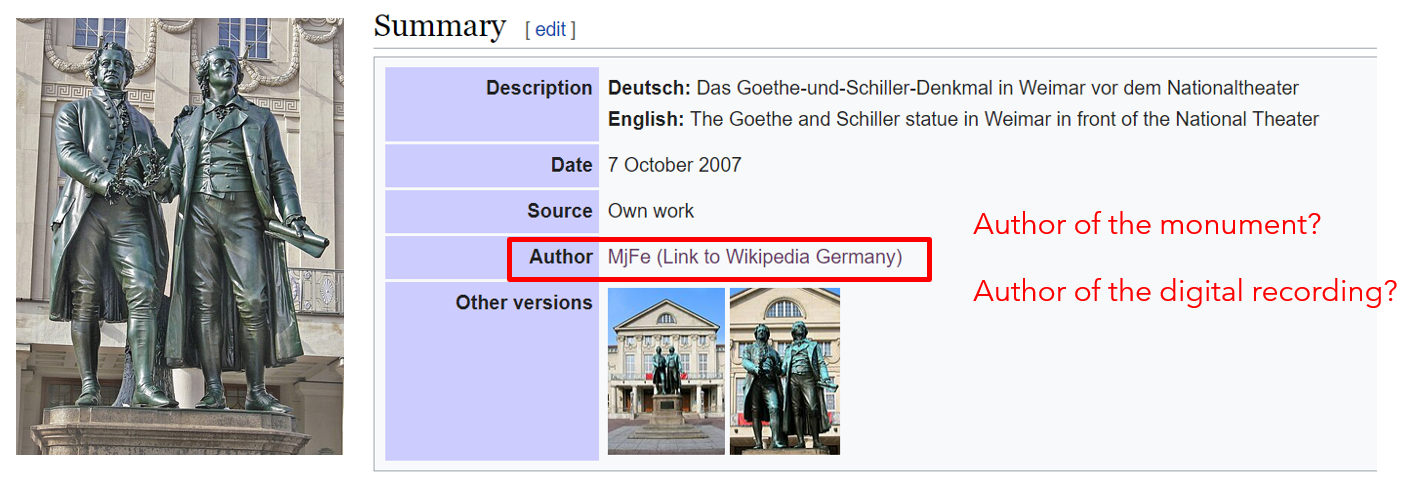
Metadata for the Goethe and Schiller Monument in Weimar. Source: MjFe, Wikimedia Commons, CC BY 3.0; highlights added.
Standards help to ensure that metadata are clear and consistent. Metadata standards define which information should be recorded to describe data and how this information should be labelled.
Depending on the research discipline and type of data, different standards and requirements may be relevant for describing data.
For example, the MoveD Metadata Generator provides templates that help systematically record relevant metadata for movement data projects.